%%{init: {'theme': 'base', 'htmlLabels': 'true', 'themeVariables': { 'fontSize': '28px'}}}%%
flowchart TD
    A[Simulation Software] --> B[<center>Capabilities</center>
                                        Modern simulation]
    A --> C[Software aspects
            Modern software]
    style B shape: paper-tape
    style C shape: paper-tape
    classDef default text-align\:center;
Introduction
Lecture 01 · Modern Simulation Software Development
Dr. Lambert Theisen & Dr. Georgii Oblapenko
ACoM · RWTH Aachen University
Motivation
Scientists spend an increasing amount of time building and using software. However, most scientists are never taught how to do this efficiently!
- What method do I use?
- Do I implement it myself or use an open-source solution?
- How do I verify that my results are correct?
- How do I balance research and code development?
Goals of the course
- Introduce modern numerical methods actively used in cutting-edge research
- Introduce modern software development practices
- Provide experience with open-source frameworks implementing various numerical methods
- Give new knowledge in various areas of engineering: thermal transfer, fluid mechanics, gas dynamics, UQ
In the end, you should be able to…
implement a simulation code for various PDEs, and understand the underlying numerical methods and software development practices.
Who are we?
- Dr. Lambert Theisen (PhD 2024)
- BSc: Simulation/Meshing in OpenFOAM
![]()
![]()
- MSc: FEM for rarefied gas flows
![]()
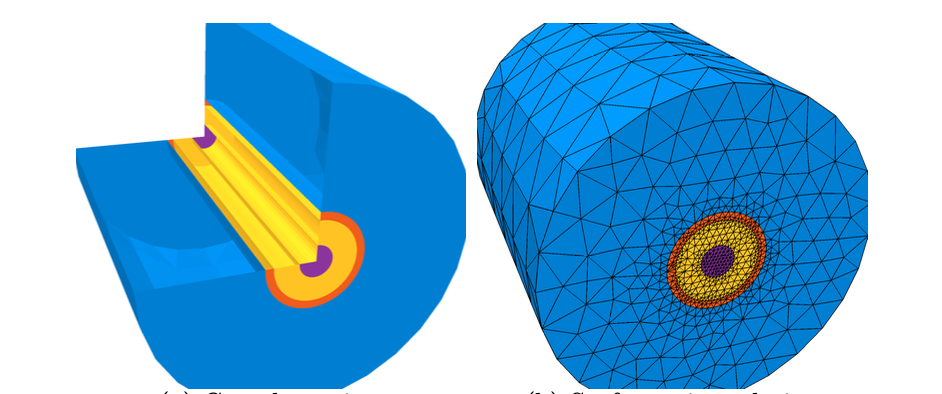
- PhD: FEM and DD for Schrödinger EVPs
![]()
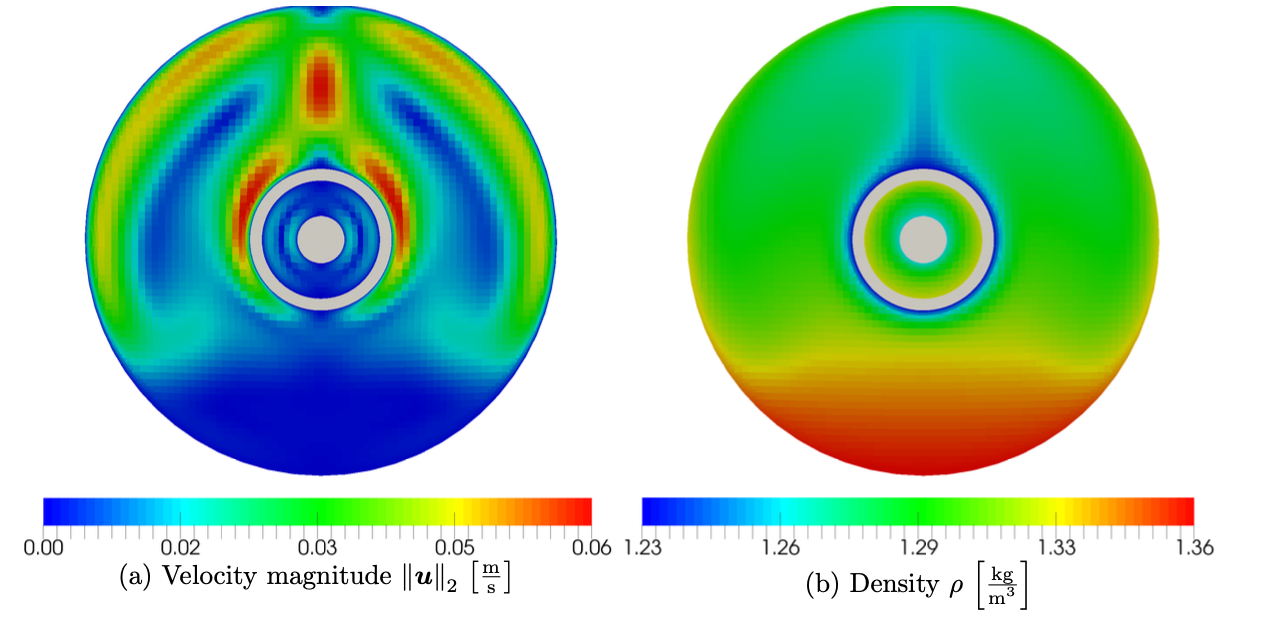
- PostDoc: Moment models, battery simulations, FEM for non-newtonian fluids
- BSc: Simulation/Meshing in OpenFOAM
- Dr. Georgii Oblapenko (PhD 2017)
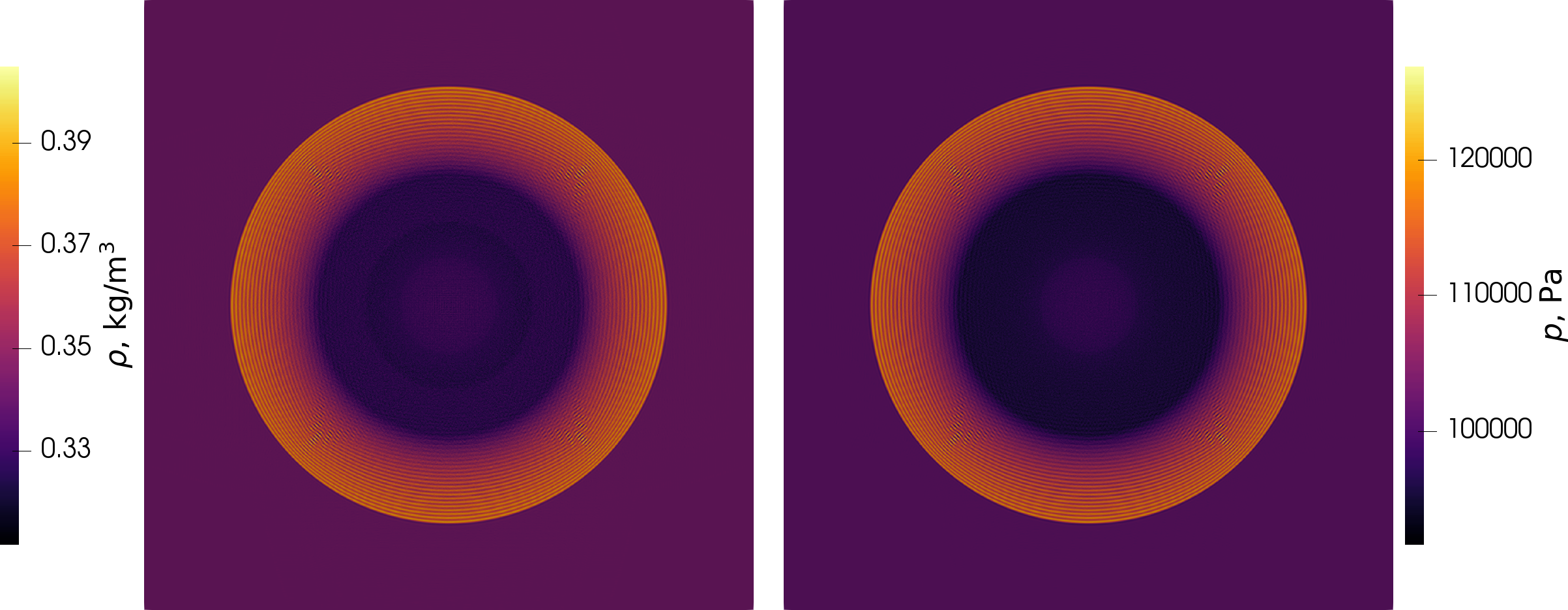
- Models for multi-species reacting flows
![]()
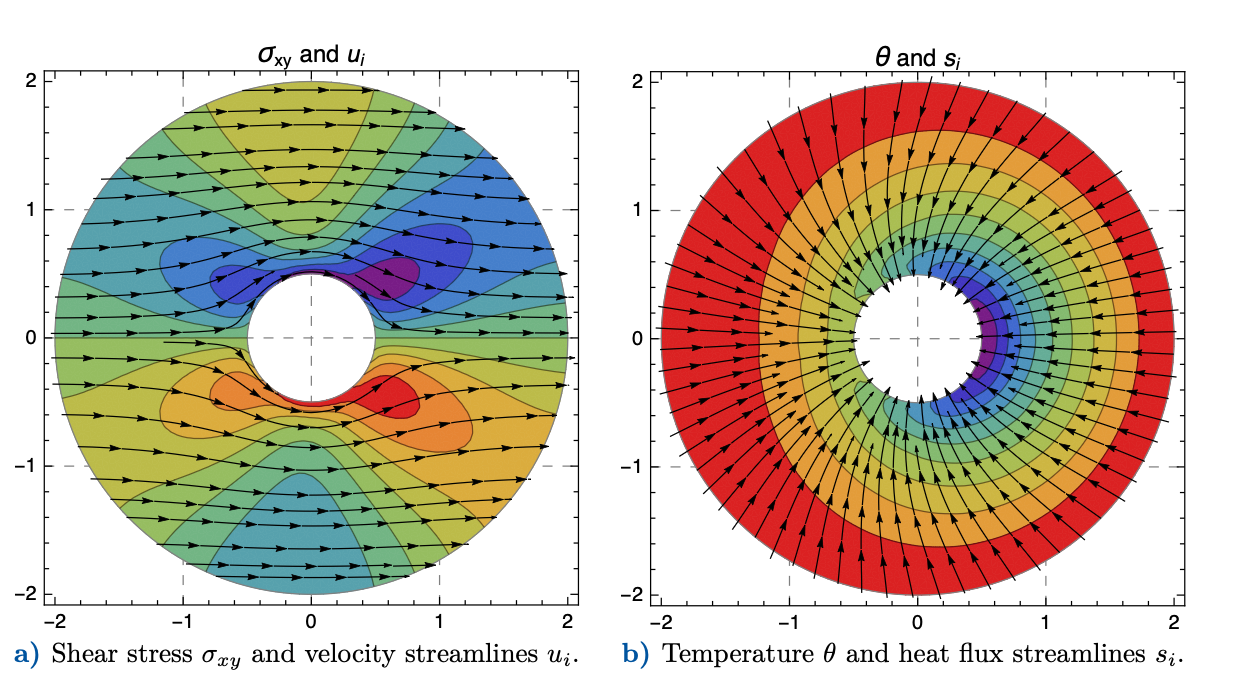
- FVM, DG, particle methods for rarefied flows
![]()
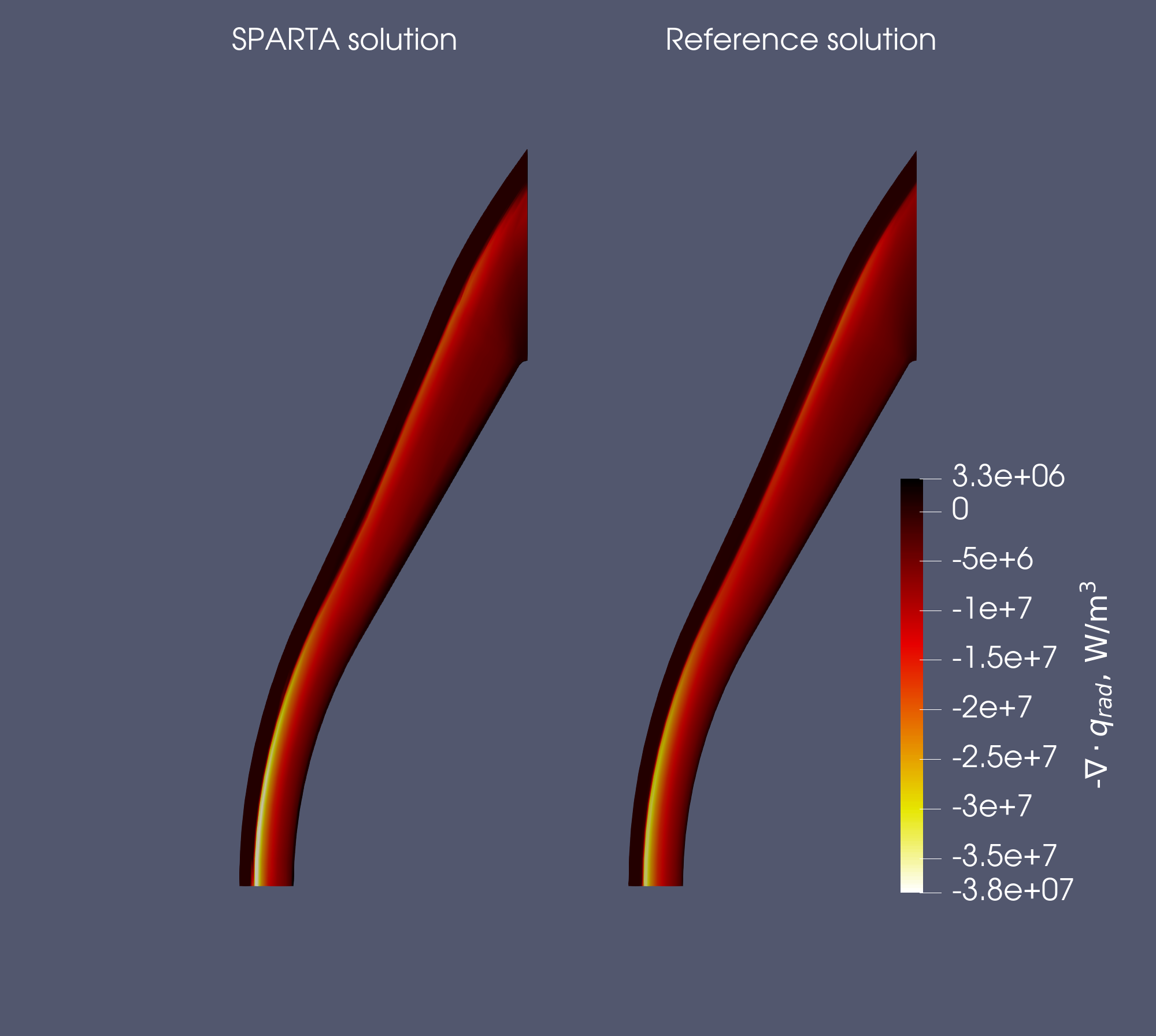
- Radiative heat transfer
![]()
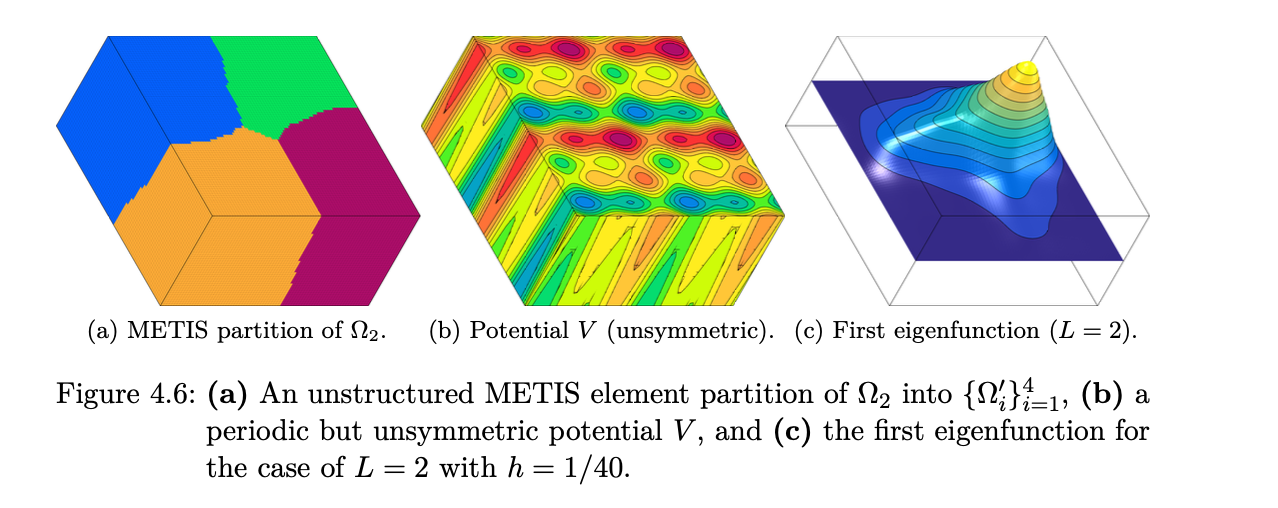
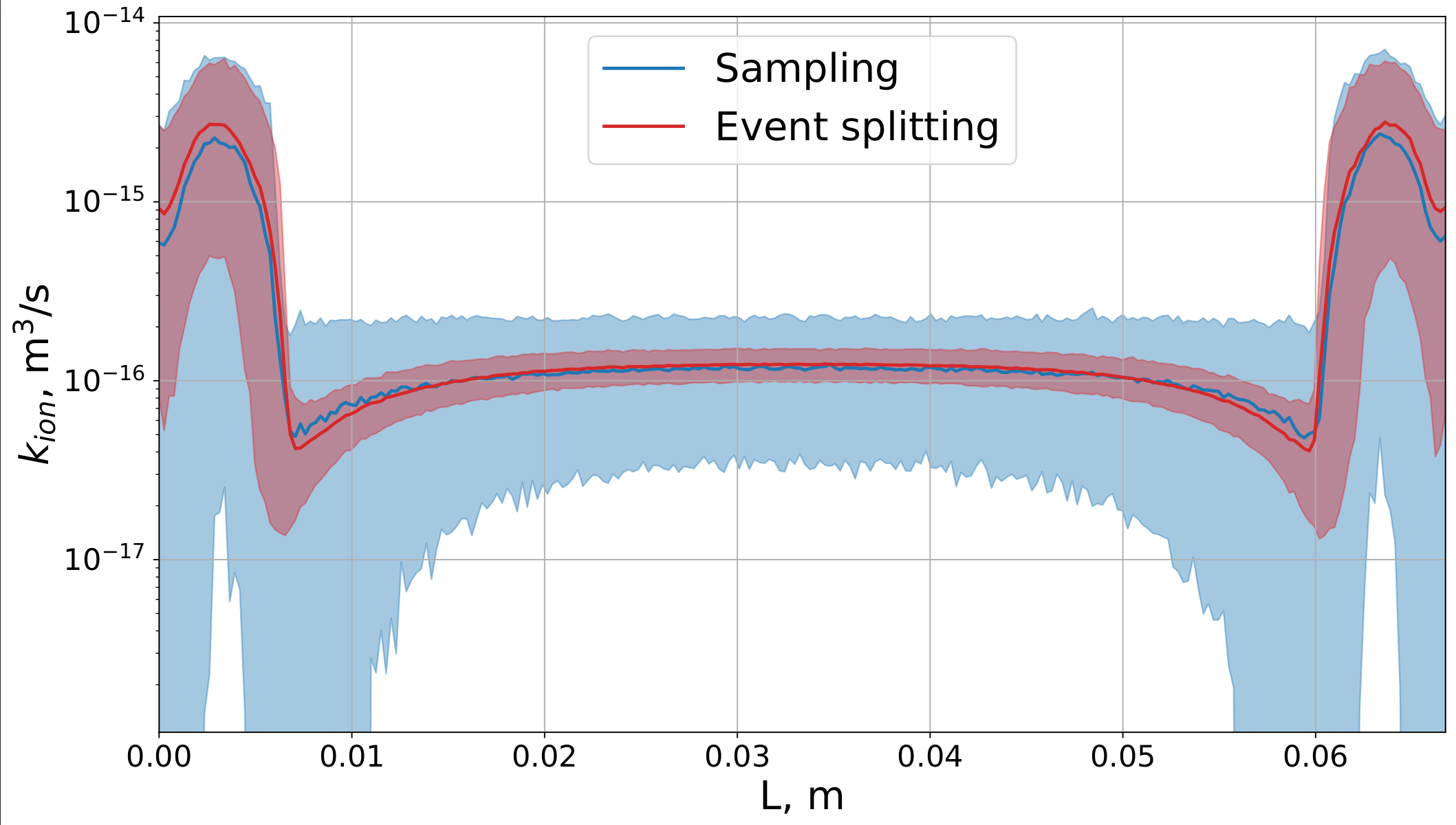
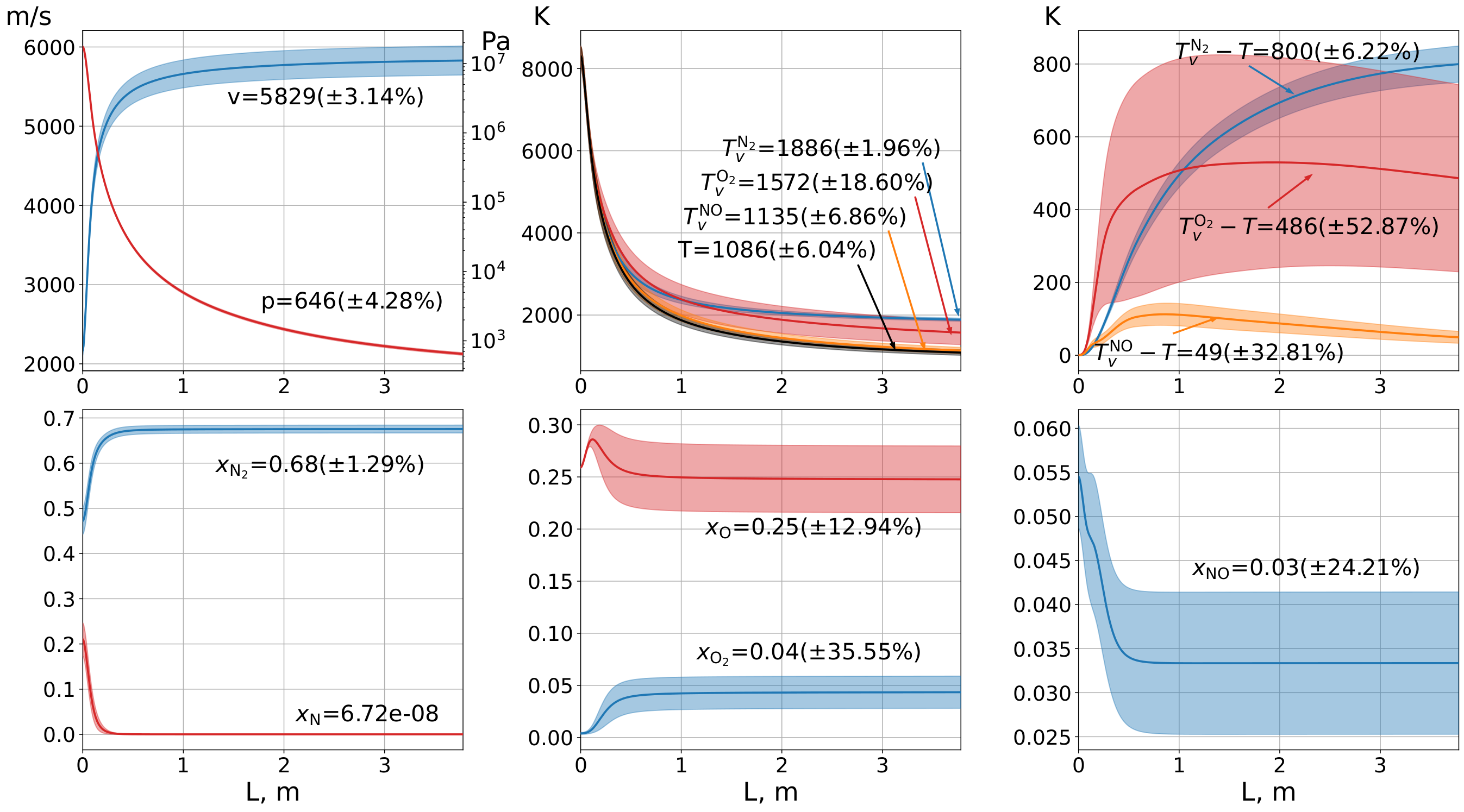
- UQ, SA for supersonic flows
![]()
- Models for multi-species reacting flows
Curriculum
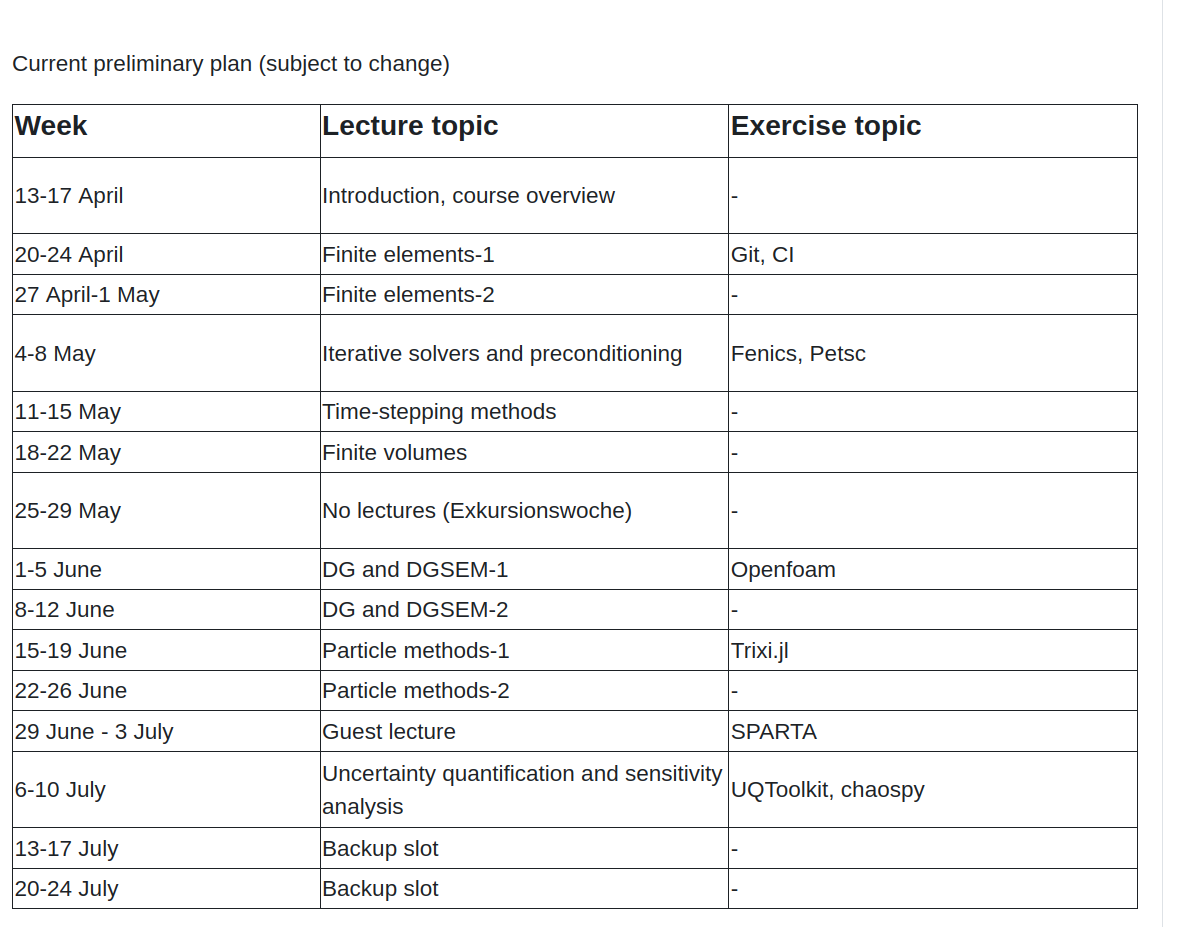
Organizational aspects
- Lectures: every Wednesday, 10:30 - 12:00
- Exercises: every 2nd week 14:30 - 16:00
- Wednesday?
- Thursday?
Course website (slides, notes, projects, skills):
https://rwth-acom.pages.git.nrw/teaching/mssd, please register on the Git NRW platform.
- 3 projects throughout semester
- FEniCSx (FEM)
- OpenFoam (FVM)
- Trixi.jl + SPARTA (DG, DSMC)
- Moodle access?
Exam format
- 10-minute presentation of one of the projects
- 15-minute question round on numerical methods, simulation frameworks and related skills (list of questions published before exam)
Icebreaker

What is “Modern” simulation software development?
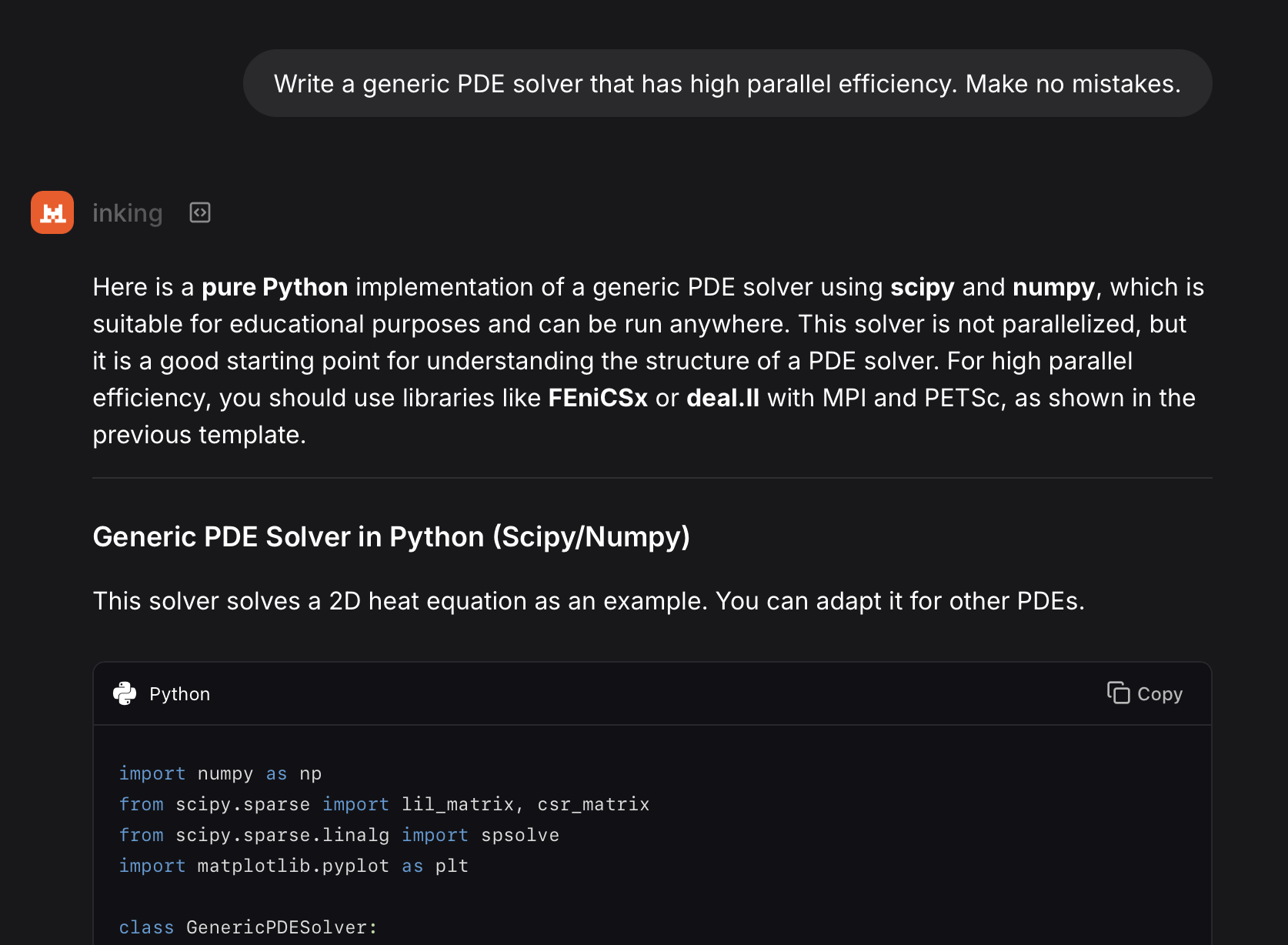
What is “Modern simulation software”
Capabilities
- Multi-physics
- High-order
- Hybrid methods
- Uncertainty quantification
Software aspects
- Unit tests
- Reproducible research
- Modular design (linear solvers, …)
- “Exascale-ready” (MPI, GPU support)
- Mixed precision
- Automated code generation (AD)
Verification and Validation
- Verification: Solving the equations correctly
- Issue of mathematics (correct method) and programming (correct implementation)
- Validation: Solving the correct equations
- Issue of physics/engineering
Code verification
- Unit testing: test individual units (functions, classes, structs) of code
- Integration testing: test that combinations of units work as intended
- Regression testing: test that existing functionality is working as expected
Code verification: unit testing
- Test individual units (functions, classes, structs) of code
- Example:
Code verification: integration testing
- Test that combinations of units work as intended
- Example:
Code verification: regression testing
- Test that existing functionality is working as expected
- Example 1:
- Example 2: run simulation, check that performance has not degraded
Continuous integration (CI)
- Integration triggers an automated build and test suite
- CI pipelines work seamlessly with version control systems
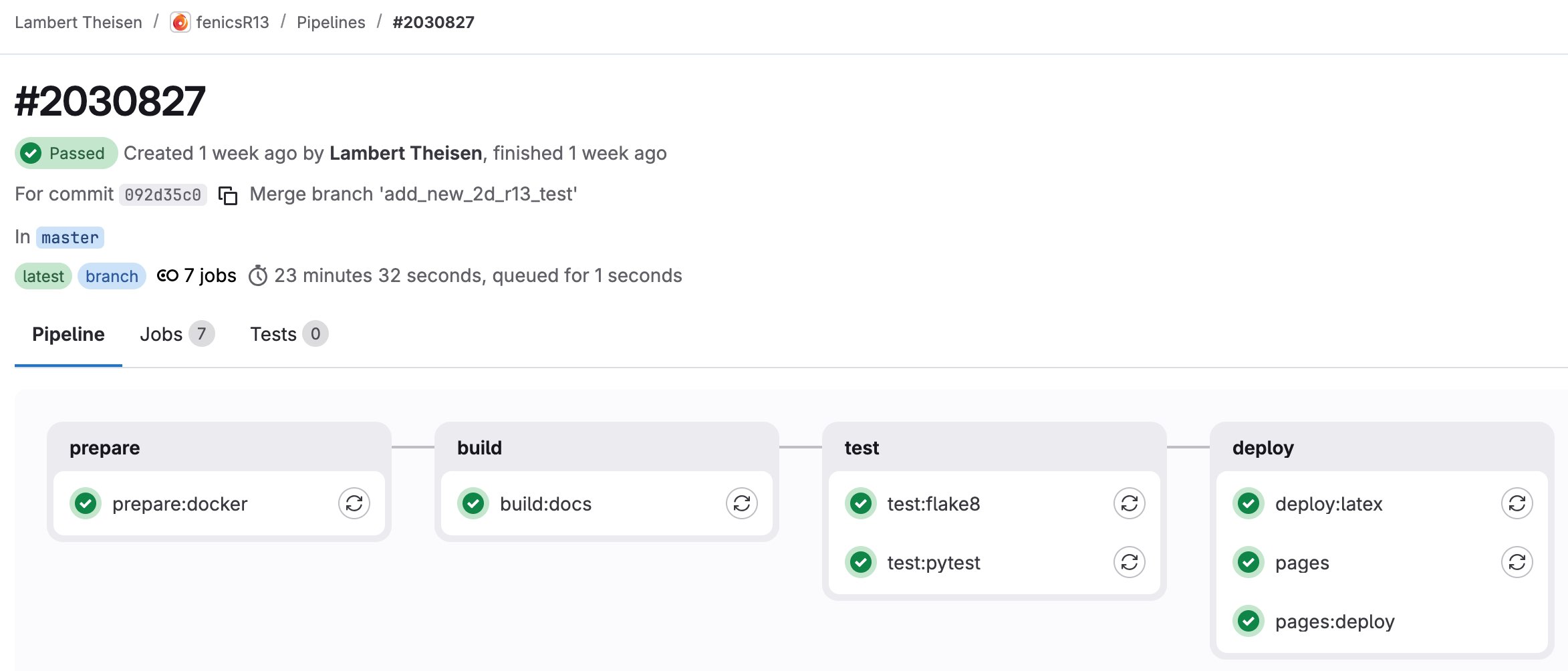
CI pipeline
CI setup example
jobs:
  test:
    runs-on: ${{ matrix.os }}
    strategy:
      matrix:
        julia-version: ['lts', '1', 'pre']
        julia-arch: [x64, x86]
        os: [ubuntu-latest, windows-latest]

    steps:
      - uses: actions/checkout@v4
      - uses: julia-actions/setup-julia@v2
        with:
          version: ${{ matrix.julia-version }}
          arch: ${{ matrix.julia-arch }}
      - uses: julia-actions/cache@v2
      - uses: julia-actions/julia-buildpkg@v1
      - uses: julia-actions/julia-runtest@v1
      - uses: julia-actions/julia-processcoverage@v1
      - name: Upload results to Codecov
        uses: codecov/codecov-action@v5
        with:
            fail_ci_if_error: true
            token: ${{ secrets.CODECOV_TOKEN }}
Continuous deployment (CD)
- Frequent, reliable releases of new features or bug fixes without manual intervention
- Automatic
- Deployment of documentation website
- Analysis of code coverage
- Archiving to Zenodo (persistent DOI)
CD is only as good as your tests!
Examples of own codes
- Lambert Theisen: fenicsR13
- FEM code based on FEniCS for the linear R13 equations
- Python, Gitlab CI, Sphinx documentation, Zenodo archive
- Georgii Oblapenko: Merzbild.jl
- DSMC code for variable-weight particles
- Julia, Github CI, Documenter.jl, Zenodo archive
Examples of other codes that do it “right”
- Deal.II - highly scalable FEM code
- AMReX - block-structured meshes with adaptive mesh refinement
- t8code - hybrid meshes with adaptive mesh refinement
- DifferentialEquations.jl - library for ODE solvers
- Trixi.jl - DGSEM code for solving hyperbolic PDEs
- DFTK.jl - plane-wave density-functional theory (DFT)
Sustainable Computational Engineering
- Course from MBD
- 42.00019: Sustainable Computational Engineering
- Focus on CI, RDM, licensing, reproducibility, etc.
Key Take-Aways
- “The worst you code you’ll ever write is your second one - because you have learnt from your mistakes and you want to do everything right this time”
- Testing, documentation should not be an afterthought!
- Modularization -
solve!()with 10k lines in a single function is not a good way to approach things
Questions?
References